Absolutely lovely home on sale now featuring garden staged by GardenScapes:
http://www.812irwin.com/gallery.html
April 15, 2012
March 10, 2012
Plant Ideas for Spring!
Eddie’s White Wonder Dogwood
Dogwoods are one of my favorite trees.
This variety has beautiful white flowers that grow to more than four
inches in diameter in the spring. Composed of four to six large, rounded
and overlapping bracts, these blooms create a striking display in the
spring. Dark green summer foliage is handsome throughout the summer
months, and turns to rich red in the fall. Small red fruits decorate its
branches in winter. A hybrid of the Pacific Northwest native dogwood,
Cornus Nuttallii, and Cornus Florida, it grows taller and has larger
flowers than those of the Cornus floida. It is also easier to grow,
more resistant to anthracnose, and generally more adaptable than its
other parent, Pacific Dogwood. Eddie’s White Wonder Dogwood grows to a
height of about 25 feet with a spread of about 20 feet.
If you’re looking for a native, drought tolerant
ground cover, that grows to about 6 inches tall, Ceanothus thyrsiflorus
var. repens ‘Louis Edmunds’ is just the ticket. This beauty has a long
name but it’s short in height for a Ceanothus. It has a beautiful light
blue flower, dark green foliage and a habit for spreading.
Managing foraging deer can be a real challenge. Fortunately, this Ceanothus variety is not a favorite of deer. Because it’s low to the ground with tougher leaves, they typically avoid it and look for more tasty flowers or shrubs.
Lomandra varieties vary in size, leaf
color, leaf blade width. They are mounding plants with strap like leaves
of green or blue-green. Varieties range in size from 1 foot tall to 3
feet tall. Some of the many nice attributes is the ability to do well
near the seacoast and to grow well in sun or shade. Drought tolerant?
You bet.
Lomandra ‘Breeze’, ‘Nyalla’, ‘Seascape’, ”Tropic Bell’, ‘Little Con’ are all varieties usually available locally.
Ceanothus: A great low growing ground cover.
Managing foraging deer can be a real challenge. Fortunately, this Ceanothus variety is not a favorite of deer. Because it’s low to the ground with tougher leaves, they typically avoid it and look for more tasty flowers or shrubs.
Lomandra: Up and Coming Plant
If you have one of those hard to fill spots, consider Lomandra, sometimes called Mat rush. They are a native of Australia, can take the sun or shade and are very tough. There are many varieties of Lomandra, but only about handful are usually available.Lomandra ‘Breeze’, ‘Nyalla’, ‘Seascape’, ”Tropic Bell’, ‘Little Con’ are all varieties usually available locally.
March 6, 2012
IRRIGATION: The cheapest water is the water you don’t use
Thanks to the weather effects of La Nina, we have had one of the
driest winters since the Gold Rush. We have a good reserve of water
from last year’s bumper winter, but it is probably worth considering the
possibility that this is not an anomaly.
Texas might prepare us for what is in store. The summer of 2011 was a record breaker in Texas, with the longest stretch of record high daily temperatures and the least amount of rain in weather history. Everything’s big in Texas, including their droughts. Some communities passed water restrictions. Based on articles I have been reading, the biggest lesson they’ve learned is the value of a good irrigation system.
Experts estimate half of residential outdoor water usage is wasted due to evaporation, wind and improperly scheduled irrigation routines. Here are a few tips that will save you money in the long run:
For the techno-savvy consumers, you might consider a Weather-Based
control irrigation system that uses real-time local climate data to
schedule irrigation. Once installed, these controllers do the thinking
for you. Add-on devices include Smart Water Application Technologies
(SWAT) that includes performance measures of irrigation adequacy and
irrigation excess, which measure how well the system meets plant water
needs know as WaterSense controllers.
Texas might prepare us for what is in store. The summer of 2011 was a record breaker in Texas, with the longest stretch of record high daily temperatures and the least amount of rain in weather history. Everything’s big in Texas, including their droughts. Some communities passed water restrictions. Based on articles I have been reading, the biggest lesson they’ve learned is the value of a good irrigation system.
Experts estimate half of residential outdoor water usage is wasted due to evaporation, wind and improperly scheduled irrigation routines. Here are a few tips that will save you money in the long run:
- Water in the early morning, before 9 a.m., to reduce evaporation and scorching of leaves from the sun.
- Water on calm days to prevent wind drift and evaporation.
- For planting beds - water less frequently but for longer duration to establish deep root systems
- Grass - shallow root systems means it can be watered more frequently for less time.
- Aerate your lawn once a year in the early spring or fall to improve water penetration.
- Make it a habit to adjust your sprinklers and check for leaks at least monthly
- Take the time to check coverage on your landscaping and make adjustments.
- Consider drip or trickle irrigation when appropriate.
February 1, 2012
New Lawn From Seed is EZ!
As a result of my testing, Scott Turf Builder Ez Seed is my new favorite grass seed. Within a week new grass is growing and it mixes nicely with existing grass. There are three varieties - fescue, bermuda and combination. They also have a dog spot repair. It requires very little effort beyond just making sure the soil is loose and pouring some of the mixture onto the soil. You can add a layer of soil on top but that is not absolutely necessary. It is available at most nurseries, including Home Depot, OSH and seasonally at Costco.
January 29, 2012
July 1, 2011
Use 'Companion Plants' to Keep Bugs at Bay
It
is started as a wet summer and that raises the potential for swarms of
mosquitoes just as the weather turns warmer. We've sung the praises of rosemary before, but it, Citronella grass, catnip and marigolds provide a surprising benefit: warding off unwanted bugs such as mosquitoes and flies.
These plants give off subtle odors that confuse or otherwise ward off insects, making them a natural form of pest control.
Basil has similar properties, plus it is a candidate to plant near tomatoes since it may improve both the growth and flavor of tomatoes. Some other 'companion plant' options that ward of pests are mentioned by the web site DIY Life:
- Peppermint: Repels ants, white cabbage moths and aphids.
- Garlic: Repels Japanese beetles, fleas and aphids.
You'll want to avoid other pairings, such as putting cucumbers near strong aromatic herbs such as sage -- the vegetable can absorb unintended flavor. See here for a full list of plants that go well (or not) together.
Another preventative measure is to remove any standing water. Go around your yard and look for any place that water gathers: uneven gutters, kiddie pools, those buckets you left behind the garage, that planter tray you never got around to using. A single five gallon bucket left out in the rain can become a mosquito nursery in single day.
Put your trash cans and recycling bins as far away from your house as you can, and while you're at it make sure that the lids on your trash cans fit snugly. Flies love garbage and ants love the sugary residue in recyclables. Moving both away will cut down on the flies buzzing around your patio table and the ants crawling around near your house.
While entertaining outside, remember citronella candles and tiki torches help keep the bugs away. They usually have a four foot 'protective' radius, so you'll need several to provide decent coverage.
It is also the time of year to set your yellow jacket traps. Be aggressive in setting traps early in the season to help you enjoy your outdoor entertaining!
These plants give off subtle odors that confuse or otherwise ward off insects, making them a natural form of pest control.
Basil has similar properties, plus it is a candidate to plant near tomatoes since it may improve both the growth and flavor of tomatoes. Some other 'companion plant' options that ward of pests are mentioned by the web site DIY Life:
- Peppermint: Repels ants, white cabbage moths and aphids.
- Garlic: Repels Japanese beetles, fleas and aphids.
You'll want to avoid other pairings, such as putting cucumbers near strong aromatic herbs such as sage -- the vegetable can absorb unintended flavor. See here for a full list of plants that go well (or not) together.
Another preventative measure is to remove any standing water. Go around your yard and look for any place that water gathers: uneven gutters, kiddie pools, those buckets you left behind the garage, that planter tray you never got around to using. A single five gallon bucket left out in the rain can become a mosquito nursery in single day.
Put your trash cans and recycling bins as far away from your house as you can, and while you're at it make sure that the lids on your trash cans fit snugly. Flies love garbage and ants love the sugary residue in recyclables. Moving both away will cut down on the flies buzzing around your patio table and the ants crawling around near your house.
While entertaining outside, remember citronella candles and tiki torches help keep the bugs away. They usually have a four foot 'protective' radius, so you'll need several to provide decent coverage.
It is also the time of year to set your yellow jacket traps. Be aggressive in setting traps early in the season to help you enjoy your outdoor entertaining!
May 1, 2011
Bringing Spices to Life
Here is a great plant to add to your garden which will help to accent meals with fresh flavors
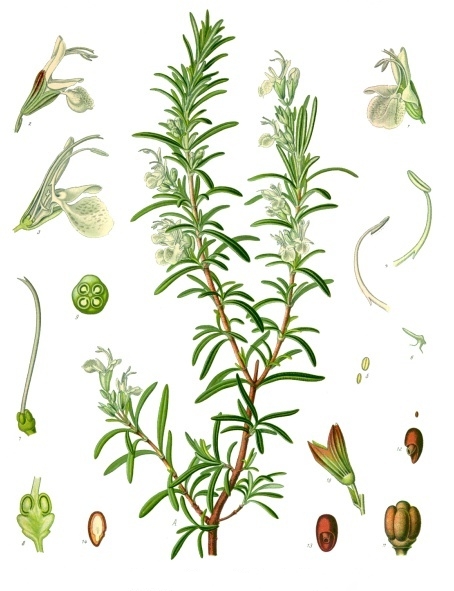
Rosemary is a perennial evergreen shrub with pretty blue flowers. Because it is relatively hardy, it can fit into spots where other plants might struggle -- for example, in a rock garden or at the edge of flower beds.
Better yet, it can provide its flavors year-round and can be applied in a huge array of dishes including lamb, steak, poultry, vegetables, soups and stews. It is a pungent yet not overpowering with a sweet, resinous flavor. Usually planting one plant is enough to meet your needs. Our family especially enjoys rosemary potatoes, and I've featured one such recipe below.
The Farmer's Almanac recommends:
Cut the potatoes in half or quarters and place in a bowl with the olive oil, salt, pepper, garlic and rosemary; toss until the potatoes are well coated.
Dump the potatoes on a baking sheet and spread out into 1 layer; roast in the oven for at least 1 hour, or until browned and crisp. Flip twice with a spatula during cooking to ensure even browning.
Remove the potatoes from the oven, season to taste, and serve. Delicious!
About Barefoot Contessa:
Popular cookbook author and magazine columnist Ina Garten throws open the doors of her Hampton's home for delicious food, dazzling ideas and good fun on Food Network's Barefoot Contessa.
Read Full Bio
Rosemary is a perennial evergreen shrub with pretty blue flowers. Because it is relatively hardy, it can fit into spots where other plants might struggle -- for example, in a rock garden or at the edge of flower beds.
Better yet, it can provide its flavors year-round and can be applied in a huge array of dishes including lamb, steak, poultry, vegetables, soups and stews. It is a pungent yet not overpowering with a sweet, resinous flavor. Usually planting one plant is enough to meet your needs. Our family especially enjoys rosemary potatoes, and I've featured one such recipe below.
The Farmer's Almanac recommends:
- Plant the seeds/cuttings in well-drained soil.
- Rosemary grows to about 4 feet tall and spreads about 4 feet as well, so be sure to give your plants enough room to grow.
Ingredients
- 1 1/2 pounds small red or white-skinned potatoes (or a mixture)
- 1/8 cup good olive oil
- 3/4 teaspoon kosher salt
- 1/2 teaspoon freshly ground black pepper
- 1 tablespoons minced garlic (3 cloves)
- 2 tablespoons minced fresh rosemary leaves
Directions
Preheat the oven to 400 degrees F.Cut the potatoes in half or quarters and place in a bowl with the olive oil, salt, pepper, garlic and rosemary; toss until the potatoes are well coated.
Dump the potatoes on a baking sheet and spread out into 1 layer; roast in the oven for at least 1 hour, or until browned and crisp. Flip twice with a spatula during cooking to ensure even browning.
Remove the potatoes from the oven, season to taste, and serve. Delicious!
About Barefoot Contessa:
Popular cookbook author and magazine columnist Ina Garten throws open the doors of her Hampton's home for delicious food, dazzling ideas and good fun on Food Network's Barefoot Contessa.
Read Full Bio
Subscribe to:
Posts (Atom)