March 5, 2013

Time to Revamp Your Container Designs?

A great way to spruce up your patio is to update your containers.  I am definitely feeling the need to tackle a few of my containers.  It is important to set up your containers for success.

Begin with choosing the plant that will be your focal point, such as a dwarf tree, shrub or grass.  Evergreen plants look better all four seasons. Dwarf trees and shrubs work well because they are compact, slow growing and lend themselves to pruning. Dwarf conifers are a great option for more formal gardens and very low maintenance  You need to think through the amount of sun in the location of the container and if the plants can handle this amount of sun. Next select your perennials or annuals to compliment your focal point. Many perennials can take over the container so keep this in mind. You can cluster containers and have the focal point in one container and perennials and annuals in the other containers.

You have heard me before about the importance of soil but I will continue my mantra and encourage you to spend a few extra dollars for high quality planting soil.  Opt for potting mixes that get their nutrients from compost instead of synthetic fertilizer that has nitrogen and will accelerate growth causing over crowding.  Make sure not to fill the container to the brim with soil and leave 1-2 inches.  This allows water to soak in gradually and prevents overflowing.

Root competition is the most overlooked threat to potted plants.  If you have a plant that did not thrive last year you might consider trimming its roots. You need to prune their roots every two years.  To prune the roots moisten the soil and lay the container on its side to slide out the root ball of your dormant plant.  Use a small root pruning saw, pruners or gardening knife to sheer off roughly a third of the root ball. Repot the plant using fresh potting soil.

It is important to water and fertilize regularly to keep plants alive and healthy.  Drip for container plants is optimal but not always easy to set up.  It is a great excuse to get in your garden and enjoy it.  Have fun being creative with your containers.  It is hard for me to recommend plants without assessing the situation. Sunset online has lots of great ideas you can explore for inspiration.

March 1, 2013

March Gardening Punch List

Adapted from SFGate:

  • Finish planting bare-root plants in the garden. They should be planted before they begin to leaf out with the warming weather.
  • Finish pruning deciduous dormant plants such as fruit trees, grapes and cane berries before they leaf out. Prune fuchsias at the end of this month, leaving two swelling leaf buds on each pruned branch.
  • Fertilize roses when they begin to leaf out. Fertilize camellias, azaleas and rhododendron with an acid fertilizer.
  • Fertilize citrus trees with a high-nitrogen fertilizer that includes iron. An iron deficiency produces chlorosis, which manifests as yellowing leaves (with green veins) and is frequently observed in Bay Area citrus.
  • Fertilize bluegrass, fescue and rye lawns lightly with lawn fertilizer.
  • Shape up uneven azalea growth after the azaleas finish blooming.
  • Discard the spent blooms of withered rhododendron flowers, taking care not to injure the growth just below the flower.
  • Let daffodil bulbs recharge by leaving the leaves attached to the bulb to provide nourishment for next year's bloom. Let foliage wither and yellow.
  • Weed now before their roots get strong or, worse, they set seed. Dig out bulb-forming weeds such as oxalis and nutsedge.
  • Pest control means eliminating snails and slugs now before they damage plants.
  • Annual labors of love include planting annuals such as ageratum, cosmos, impatiens, lobelia, marigold, pansies, petunias and violas. You can mix them in with the perennials to extend the blooming period. Plant perennials such as achillea, campanulas, columbine, geranium and marguerites. Plant summer bulbs such as gladiolus, dahlias and lilies. Begonias from bulbs are also planted now.

February 6, 2013

10 Tips for Maintaining a Healthy Garden

1. First things first - soil.  You have heard me before about how important this is for your garden to thrive. Plants need healthy soil in the right places. Use a hoe or spade to turn your soil often.  This also helps keep the weeds down.  One of my all time favorite garden tools is the scuffle (hula) hoe. It turns the soil easily and makes it so easy to weed after turning the soil. Harder soils, like clay, need amending every two to three years.

2. For clay soils, consider topping up with an organic compost to keep the soil lose and at its peak for a longer period. Use quality or locally purchased compost to top up your soil.

3. Like a chef values a great kitchen tools, for gardeners, there is no substitute for the best garden tools. My favorite tools are quality pruning shears, spades and the  scuffle (hula) hoe to keep my garden beautiful and healthy.

4. Plants can’t survive without moisture. Most plants are made up of over 90% water so it’s essential to keep them hydrated. Water plants early in the morning when the weather is cooler so less water is lost through evaporation. Check your sprinklers on a monthly basis for problems.

5. For those with less time for daily watering of container plants consider cymbidiums, ferns, geraniums and succulents that can  retain moisture longer and require less watering and more tolerant when neglected.

6. When planting any shrub, fruit, vegetable or bulb, make sure there is enough space for growth. Each plant will need moisture, sunlight and nutrients from the soil, so be sure reduce competition and make sure each plant has its adequate room for free flowing air circulation and essentials.

7. Growing or want to grow vegetables in your garden? Here too, soil and space are important but most vegetables also need to bask in direct sunlight. It’s also important to keep them clipped and watered.

8. Weeds can be the nemisis of any garden.  Be vigilant in weeding and for stubborn weeds especially in your grass tackle it with chemicals. Weed often this spring about weeding and your garden will reap the benefits the rest of the year.

9. Mulch is great for maintaining healthy soils, keeping them cool and pleasing to the eye, but mulch is also good for suppressing weeds. 

10. Is your garden being taken over by unsightly slugs & snails? First thing in the morning is a good time to catch them in action and dispose of them. Bet you never thought beer could beat slugs. Keep a container filled with it and let your soil drink up the beer overnight. The slugs will be attracted to the scent and you’ll notice the container full of them in the morning. Offer them beer each night until the little creatures have disappeared.

February 5, 2013

Hellebores - What to look for when choosing hybrids

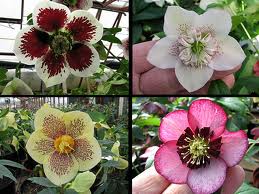
One of the first plants to start blooming in my garden in late winter and early spring is hellebores. It appears to revive with the first warming rays of the sun. You have to love a plant that can still show off at this time of year.  The flowers can last for months too which is one of its great features.

The most popular and easiest to grow are the Oriental hybrid hellebores. They are long blooming, low-maintenance, basically evergreen perennials that like partial shade to full shade. They remind me of orchids in the vast variety that is offered these days. There is a lot of choice and come in virtually any color you want: white, green, pink, apricot and purple, to name a few.  They have single, double and star shaped flowers.  Short stem ones face outward more. My best advice is to buy them when they are blooming to ensure you are getting what you want. They are starting to appear in nurseries now.

The Gold Standard in Garden Hoses

As someone who uses a water hose often I have been in search for the perfect hose most of my life.  I decided to test out the Water Right Slim & Light Polyurethane Garden Hose in January and I am thrilled to say I love it!!!  It is so light (3lbs for 50 ft hose) and  no kinks. It has a narrow diameter for the water to come out so it increases the water pressure.  It was selected as one of the Top 100 products in 2012 and I have to agree.


Here is the link if you are in the market- http://www.waterrightinc.com  It comes in lots of fun colors too.

February 1, 2013

February Garden To-Do list

SF Gate does a tremendous rundown each month of timely things to do for your garden.  Here is their latest:

The seed catalogs arriving in your mailbox are a cue to start thinking ahead to spring and summer vegetable gardens. Planning early allows ambitious gardeners to get a jump on the growing season and leaves time for a second crop in late summer and early fall. Consider sowing tomato, eggplant and pepper seeds indoors later this month. They'll be ready to harden off (expose gradually to the outdoors) around the time the weather warms in early May.
- February is the last chance to buy bare-root plants. As long as bare-root plants are kept in a cool, shaded area with their roots protected, they will wait a few weeks until the soil is suitable for planting.
- Complete winter pruning of dormant plants such as cane berries, fruit trees, grapes, roses and wisteria. Do not delay too long because warm weather will send these plants into a vigorous growth spurt, which you want to direct by pruning.
- Continue to pick up fallen camellia flowers in order to prevent the spread of camellia petal blight.
- Spray fruit trees and roses with a dormant spray of horticultural oil to kill overwintering insect eggs.
- Azaleas and camellias are in bloom and rhododendron are in the budding stage. Now (while you can see the bloom color) is an excellent time to purchase them.
- Prepare garden tools and machinery for spring use. Wire brush and sharpen tools with cutting edges such as shovels, spades, hoes, pruning shears, hedge trimmers and trowels.
-Prepare beds for new plants. Fertilize with compost or manure to replenish nutrients and boost the soil's tilth.
Seed catalogs give the armchair gardener an opportunity to dream big for spring while waiting for the rains to taper off. A sampling of Northern California seed companies' catalogs and their specialty offerings:
Baker Creek's 2013 Pure Seed Book: Owner of the Petaluma Seed Bank specializes in heirloom and open-pollinated seeds. Request catalog at www.rareseeds.com.
Kitazawa Seed Co.: Oakland company specializes in Asian vegetables. Request catalog at www.kitazawaseed.com.
Natural Garden Co.: All-organic nursery based in Petaluma sells vegetable, herb and flower seeds and tomato seedlings. Request catalog at www.naturalgardening.com.
Renee's Garden: USDA-certified organic vegetable and herb seeds. Online catalog: www.reneesgarden.com.
Larner Seeds: Bolinas company specializes in California native seeds. Demonstration garden open to the public. Online catalog: www.larnerseeds.com.
Living Seed Co.: Mill Valley couple sell heirloom and open-pollinated collections. For catalog e-mail info@livingseedcompany.com. www.livingseedcompany.com.

Magnolia celebration

Magnolias are in bloom throughout the Bay Area. Head to the San Francisco Botanical Garden in Golden Gate Park to see one of the most important collections outside China in all its glory now through mid-March during the "Magnificent Magnolias" celebration. Some highlights:
-- Self-guided tours of the magnolia collection. Download the maps at www.sfbotanicalgar den.org or pick up a copy at the ticket kiosk.
-- Guided tours with curator Don Mahoney, 1-3 p.m. Feb. 16 and docent Dr. Joseph Barbaccia, 1-3 p.m. March 3. $15, tickets available at www. sfbotanicalgarden.org.
-- Magnolias by Moonlight Walk, 6-8 p.m. Feb. 25, March 25. Yes, it's a full moon. Register by calling (415) 661-1316, Ext. 400. Rain cancels. $15 payable at the start of the walk.
-- Drawing Magnolias, 10 a.m.-3 p.m. Feb. 21. Pencil-drawing class with botanical artist Nina Antze. $90. San Francisco County Fair Building. (415) 661-1316, Ext. 412.
The garden is at Ninth Avenue and Lincoln in San Francisco.

January 16, 2013

LinkFest: Starting 2013 Off Right

Sunset Magazine has some great ideas about budget-friendly ways a backyard can be dressed up a bit: Chic Backyard on a shoestring.

Mother Earth News has very detailed tips about crops that can put food on the table, with Top Crops for Homegrown Food Year-Round.

Hate dandelions?  Here is one original way to plot their demise: eat them!  HGTV explores that avenue with A Meddlesome, But Toothsome Weed, Dandelion.

Want to make sure to get the year started off right?  Make sure to read January Gardening Essentials at SFGate.