January 11, 2016

Resolution: 'Be a Gardener'


As regular traditions go, resolutions tend to last as long as Rose Bowl leftovers -- and are usually as appetizing.  Before throwing that ambition into the compost heap, maybe try an idea that will grow with you: make your thumb go 'green' this year.

Starting indoors this time of year makes sense, and one of the blogs we follow has a good suggestion to get the ball rolling:
  • Get some houseplants growing. Pick several varieties of herbs or maybe a pepper plant and place them in a sunny windowsill.  Get your green thumb without having to even go outside. By growing food indoors where you’re likely to pass the plant numerous times a day, it will make it easier to care for.  Windowsill gardens are a fun way to bring the outdoors in, and grow some food with very little effort.
See some more ideas at the following link:
http://www.urbanorganicgardener.com/2015/12/how-to-become-a-gardener-in-2016/

October 11, 2013

All We Are Saying Is Give Trees A Chance

Trees add interest to any landscape
The best time to plant a tree was 20 years ago. The second best time is now.   – Chinese Proverb

It is easy to take for granted the effect trees can have upon us, but their impact can be both aesthetic and tangible.  Just this week, The Wall Street Journal reported one study found that homes with trees planted between the sidewalk and the street sold for $7,130 more, on average, than homes without street trees.   

In landscaping terms, trees can often serve as the anchor for a yard in good and bad ways.  Eucalyptus are notorious for dropping branches on unsuspecting pedestrians and making the soil toxic for other plants.  Aspen root systems are insidious and will try to take over your yard.   Many fruit and nut trees such as the black walnut create seasonal messes and are pollen machines. 

Since a tree is likely to be a long-term commitment, picking the right species requires a little homework and patience.  Often it takes a little imagination to picture that sapling in the orchard supply store as a great strapping oak thirty years hence.

One online resource is Sunset Magazine Plant Finder.  Simply plug in your zip code, specify other parameters such as the amount of sun, water and space are available, and the website will generate a detailed list.

April 12, 2013

The Proper Soil Mix for a Raised-Bed Garden


I recommend amending your soil every year for your vegetable garden to give your vegetables the best start to the growing season.  We recently built a new fence and had to move my vegetable garden and replaced all of the soil. The best raised-bed gardens include a mix of topsoil and compost such as pine bark or wood chips, which allow for good water and nutrient retention and excellent drainage. 

If you need alot I would recommend a trip to Lynsgo for their vegetable blend which contains compost with manure.  It is a good general mix for all veggies.  If you just need a couple of bags I like the Doctor Earth Organic Vegetable Blend that includes earthworm castings, kelp, fish bone meal and lots of rich organic nutrients.

April 9, 2013

Top 10 Edible (and relatively easy) Plants from Garden to Table

I love the farm to table trend and it inspires me to grow my vegetables more and more.  Here are 10 edible plants that you can use this year from your garden to serve at your table.  You do not have to plant them in a vegetable garden necessarily but think sunny locations for these plants.
Lettuce- Incredibly easy and great for salads.  They grow really fast and you can try lots of varieties throughout the growing season. The biggest mistake is not harvesting them in time and they get dried out.

Tomatoes- Needs full sun, great soil and water.  More details about tomatoes to follow.


Zucchini- It needs extra space or can be trained on a trellis. You will be surprised how many zucchini one plant can produce. Think Italy and fried zucchini blossoms at home.

Beans- They are fast growing and best trained on a trellis or pole.
Chives- They are really easy to maintain and you just trim it and it keeps growing.
Basil- You need to pinch the flowers off to make it become fuller.  I place them between the thyme and oregano and the pest problems seem to decline.  Last year, I tried purple basil which was excellent.
Thyme- Lots of varieties to choose from and really easy year around.  They have a lovely flower and can be placed anywhere. Some formal gardens use it as a border.
Oregano- A great herb for cooking and available year around.  Last year, I had so much from three plants that I was thinking I was going to need to set up a booth at a farmers market.
Rosemary- you only need one since they can grow so big over the years.  I only have one tucked in a corner and it is 3 ft tall and used year around.
Strawberries- These usually don’t make it into the house in my house because I am snacking on them on the way in. They produce year after year if there are no frost issues.

April 8, 2013

Tips for Planting Tomatoes


Tomatoes are becoming available everywhere including Costco at the moment.  I would suggest waiting until later in the month for those of you who live in the San Mateo area when it becomes  a little warmer at night. Here are a few quick tips in planting tomatoes-
  • Pull off suckers and lower branches to help produce roots along the stem
  • Dig a deep whole bury part of the stem.
  • Stake tomatoes plants as soon as possible. A simple way is to drive a  tall stake outside of the root ball (or 2 inches if it is a 4 inch container).  Tie with garden tape or twine. Cages are an option too
  • Water regularly but not too much.

April 7, 2013

What has Gone Wrong with Your Tomatoes?

Most of us love fresh tomatoes from our garden but sometimes despite our best efforts something goes wrong during the growing season.  Here are some common problems and solutions to keep in mind.
  • Splitting of the fruit starts to happen. The plant starts taking up large amounts of water, causing the fruit to swell with moisture until its skin cannot stretch anymore. This could be a sign of over watering and you need to cut back.  Also, be active about harvesting during this time. When a tomato plant starts producing fruit, it only needs about 1 inch of water per week.
  • Greasy brown patches all over your plants means you have blight. If this is happening there is not much you can do to salvage the crop.  The disease will eventually kill your plant.  Remove the plant and hope that is has not affected the other plants. Blight causes a fungus to develop, which in turns produces millions of fungual spores that can travel through the air to other plants.
  • All your ripe tomatoes are watery and tasteless.  This is due to over watering.  When a plant starts fruiting, it starts looking yellow and tired. That’s when we often rush out and water the plant to perk it up. This is the wrong thing to do and it ends up compromising its flavor and texture. So, when your plant starts to look haggard late in the season, leave them alone because they are busy putting all their energy into producing delicious fruit.
  • Chew holes are showing up and ruining the fruit. Holes can be attributed to several different pests. The most common problem is slugs who love to snack on fresh tomatoes. Slug bait or traps are one option. You can also wrap a strip of copper tape around the base of your plant to prevent slugs ability to climb.  Squirrels can also be a culprit.

April 1, 2013

April To-Do List

  • Start your vegetable garden. Experiment with one new vegetable this year.
  • The selection of annuals is getting better daily.  Impatiens are now available.
  • Continue weeding while it is easier with the moist soil.
  • Check your sprinklers!
  • Fertilize annuals, perennials , and  trees.
  • If you have boxwood, azaleas or citrus that are yellowing feed them with ironite
  • Summer bulbs are available.

March 6, 2013

Looking to Bring in Some Color This Spring with Perennials?

 
Perennials bring in the spring color like no other plants and can last for months and months and sometimes bloom more than once. These are great options for sunny areas of the yard. 

  • Alstromeria- comes in a varity of colors. It is great for clipping and putting in vases and lasts for up to two weeks.
  • Catmint- love the purple flowers that provide a cottage garden feel.  It is great contrast with white roses
  • Cornflowers- it is a striking looking flower to enjoy
  • Coreopsis- daisy like flower in lots of great colors
  • Forget Me Nots- classic with petite flowers. 
  • Gaura- a great white punch for the garden and the butterflies love it.
  • Rudebeckia- summer color with its “sun flower like” flower
  • Heuchera- it seems like every year they are coming out with a new variety. They are known for their interesting leaves.  I like to use them in containers with other plants too.
  • Lavender- lots of great varieties. One of my favorite classic looking french lavenders that doesn’t get so big and woody is the Hicote Lavender.
  • Jerusalem Sage- this is a new favorite of mine.  The yellow flower is very cool looking and the foliage looks good year around.
  • Yarrow- they have been expanding the flower color options.  The most common one is yellow in color
  • Penstomen- love this plant and blooms for months and usually twice in the season.  There are lots of colors to choose from especially in the pinks and purples
  • Salvia- lots of varieties and colors to choose from for your garden and very low maintenance.

March 5, 2013

Come to the Dark Side- Deep, Richly Colored Foliage Brings Drama to a Garden

Some of my favorite gardens are the ones that weave in dark colors to add a layer of complexity to the garden. Your eyes gravitate to the dark colors to see what they look like.  It helps to bring depth and texture to the garden


What we call “black” in the garden is actually shades of deep red, purple, brown and bronze.  When using black plants, opening up your color palett
What we call “black” in the garden is actually shades of deep red, purple, brown and bronze.  When using black plants, opening up your color palette is a must.  Green is the default color for foliage, so when incorporating black plants, it’s important to give thought to smoothly transitioning from the greens of most plants to the darkness of your garden star attraction.  Some color pairings make the task easier than others. Here are options that offer plenty of contrast without ever looking over done.

Black and Blue- Adding a splash of black foliage to blue flowers gives a nice punch.  Most black leaves have undertones of blue and purple in them so they compliment each other.  A good example of this is a blue/ purple penstomen, black colored heuchera, and purple lobelia .

Black and Silver- This is a moody combination that is stylish and modern.  Gray shines in gardens and looks great when mingled with darker leaves.  Amazing red phorium, Jerusalem sage and lavender is striking in a garden.

Black and White- We all love to wear it and it’s always in fashion so why not try it in the garden.  This is a high contrast power couple that makes the white pop.  I think mixing in some green is important with this combination too.  I have used this most often in potted plants for interesting table or side table color. I have in my garden in a shady area a combination of the Laceleaf Japanese Maple in ‘Ever Red’, oak hydrangeas and lopopetalum ‘razzleberri’. The loropetalum’razzleberri’ has green leaves with a touch of red at the tips which provides a nice transition from the deep red in the maple to white in the hydrangea.

Black and Chartreuse- This can be very striking in potted plants for annual color and fun to experiment.  I have tried it in combination with other colors too.  Both colors are striking so you need to use them both sparingly.
It is important not over do it with black plants. Decide on a few starring attractions, then surround them with supporting cast. Most black plants need light to look their best or they also get lost in the absence of light.
e is a must.  Green is the default color for foliage, so when incorporating black plants, it’s important to give thought to smoothly transitioning from the greens of most plants to the darkness of your garden star attraction.  Some color pairings make the task easier than others. Here are options that offer plenty of contrast without ever looking over done

Black and Blue- Adding a splash of black foliage to blue flowers gives a nice punch.  Most black leaves have undertones of blue and purple in them so they compliment each other.  A good example of this is a blue/ purple penstomen, black colored heuchera, and purple lobelia .

Black and Silver- This is a moody combination that is stylish and modern.  Gray shines in gardens and looks great when mingled with darker leaves.  Amazing red phorium, Jerusalem sage and lavender is striking in a garden.

Black and White- We all love to wear it and it’s always in fashion so why not try it in the garden.  This is a high contrast power couple that makes the white pop.  I think mixing in some green is important with this combination too.  I have used this most often in potted plants for interesting table or side table color. I have in my garden in a shady area a combination of the Laceleaf Japanese Maple in ‘Ever Red’, oak hydrangeas and lopopetalum ‘razzleberri’. The loropetalum’razzleberri’ has green leaves with a touch of red at the tips which provides a nice transition from the deep red in the maple to white in the hydrangea.

Black and Chartreuse- This can be very striking in potted plants for annual color and fun to experiment.  I have tried it in combination with other colors too.  Both colors are striking so you need to use them both sparingly.
It is important not over do it with black plants. Decide on a few starring attractions, then surround them with supporting cast. Most black plants need light to look their best or they also get lost in the absence of light.

Time to Revamp Your Container Designs?

A great way to spruce up your patio is to update your containers.  I am definitely feeling the need to tackle a few of my containers.  It is important to set up your containers for success.

Begin with choosing the plant that will be your focal point, such as a dwarf tree, shrub or grass.  Evergreen plants look better all four seasons. Dwarf trees and shrubs work well because they are compact, slow growing and lend themselves to pruning. Dwarf conifers are a great option for more formal gardens and very low maintenance  You need to think through the amount of sun in the location of the container and if the plants can handle this amount of sun. Next select your perennials or annuals to compliment your focal point. Many perennials can take over the container so keep this in mind. You can cluster containers and have the focal point in one container and perennials and annuals in the other containers.

You have heard me before about the importance of soil but I will continue my mantra and encourage you to spend a few extra dollars for high quality planting soil.  Opt for potting mixes that get their nutrients from compost instead of synthetic fertilizer that has nitrogen and will accelerate growth causing over crowding.  Make sure not to fill the container to the brim with soil and leave 1-2 inches.  This allows water to soak in gradually and prevents overflowing.

Root competition is the most overlooked threat to potted plants.  If you have a plant that did not thrive last year you might consider trimming its roots. You need to prune their roots every two years.  To prune the roots moisten the soil and lay the container on its side to slide out the root ball of your dormant plant.  Use a small root pruning saw, pruners or gardening knife to sheer off roughly a third of the root ball. Repot the plant using fresh potting soil.

It is important to water and fertilize regularly to keep plants alive and healthy.  Drip for container plants is optimal but not always easy to set up.  It is a great excuse to get in your garden and enjoy it.  Have fun being creative with your containers.  It is hard for me to recommend plants without assessing the situation. Sunset online has lots of great ideas you can explore for inspiration.

March 1, 2013

March Gardening Punch List

Adapted from SFGate:

  • Finish planting bare-root plants in the garden. They should be planted before they begin to leaf out with the warming weather.
  • Finish pruning deciduous dormant plants such as fruit trees, grapes and cane berries before they leaf out. Prune fuchsias at the end of this month, leaving two swelling leaf buds on each pruned branch.
  • Fertilize roses when they begin to leaf out. Fertilize camellias, azaleas and rhododendron with an acid fertilizer.
  • Fertilize citrus trees with a high-nitrogen fertilizer that includes iron. An iron deficiency produces chlorosis, which manifests as yellowing leaves (with green veins) and is frequently observed in Bay Area citrus.
  • Fertilize bluegrass, fescue and rye lawns lightly with lawn fertilizer.
  • Shape up uneven azalea growth after the azaleas finish blooming.
  • Discard the spent blooms of withered rhododendron flowers, taking care not to injure the growth just below the flower.
  • Let daffodil bulbs recharge by leaving the leaves attached to the bulb to provide nourishment for next year's bloom. Let foliage wither and yellow.
  • Weed now before their roots get strong or, worse, they set seed. Dig out bulb-forming weeds such as oxalis and nutsedge.
  • Pest control means eliminating snails and slugs now before they damage plants.
  • Annual labors of love include planting annuals such as ageratum, cosmos, impatiens, lobelia, marigold, pansies, petunias and violas. You can mix them in with the perennials to extend the blooming period. Plant perennials such as achillea, campanulas, columbine, geranium and marguerites. Plant summer bulbs such as gladiolus, dahlias and lilies. Begonias from bulbs are also planted now.

February 6, 2013

10 Tips for Maintaining a Healthy Garden

1. First things first - soil.  You have heard me before about how important this is for your garden to thrive. Plants need healthy soil in the right places. Use a hoe or spade to turn your soil often.  This also helps keep the weeds down.  One of my all time favorite garden tools is the scuffle (hula) hoe. It turns the soil easily and makes it so easy to weed after turning the soil. Harder soils, like clay, need amending every two to three years.

2. For clay soils, consider topping up with an organic compost to keep the soil lose and at its peak for a longer period. Use quality or locally purchased compost to top up your soil.

3. Like a chef values a great kitchen tools, for gardeners, there is no substitute for the best garden tools. My favorite tools are quality pruning shears, spades and the  scuffle (hula) hoe to keep my garden beautiful and healthy.

4. Plants can’t survive without moisture. Most plants are made up of over 90% water so it’s essential to keep them hydrated. Water plants early in the morning when the weather is cooler so less water is lost through evaporation. Check your sprinklers on a monthly basis for problems.

5. For those with less time for daily watering of container plants consider cymbidiums, ferns, geraniums and succulents that can  retain moisture longer and require less watering and more tolerant when neglected.

6. When planting any shrub, fruit, vegetable or bulb, make sure there is enough space for growth. Each plant will need moisture, sunlight and nutrients from the soil, so be sure reduce competition and make sure each plant has its adequate room for free flowing air circulation and essentials.

7. Growing or want to grow vegetables in your garden? Here too, soil and space are important but most vegetables also need to bask in direct sunlight. It’s also important to keep them clipped and watered.

8. Weeds can be the nemisis of any garden.  Be vigilant in weeding and for stubborn weeds especially in your grass tackle it with chemicals. Weed often this spring about weeding and your garden will reap the benefits the rest of the year.

9. Mulch is great for maintaining healthy soils, keeping them cool and pleasing to the eye, but mulch is also good for suppressing weeds. 

10. Is your garden being taken over by unsightly slugs & snails? First thing in the morning is a good time to catch them in action and dispose of them. Bet you never thought beer could beat slugs. Keep a container filled with it and let your soil drink up the beer overnight. The slugs will be attracted to the scent and you’ll notice the container full of them in the morning. Offer them beer each night until the little creatures have disappeared.

February 5, 2013

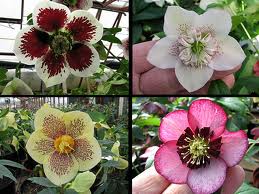
Hellebores - What to look for when choosing hybrids

One of the first plants to start blooming in my garden in late winter and early spring is hellebores. It appears to revive with the first warming rays of the sun. You have to love a plant that can still show off at this time of year.  The flowers can last for months too which is one of its great features.

The most popular and easiest to grow are the Oriental hybrid hellebores. They are long blooming, low-maintenance, basically evergreen perennials that like partial shade to full shade. They remind me of orchids in the vast variety that is offered these days. There is a lot of choice and come in virtually any color you want: white, green, pink, apricot and purple, to name a few.  They have single, double and star shaped flowers.  Short stem ones face outward more. My best advice is to buy them when they are blooming to ensure you are getting what you want. They are starting to appear in nurseries now.

The Gold Standard in Garden Hoses

As someone who uses a water hose often I have been in search for the perfect hose most of my life.  I decided to test out the Water Right Slim & Light Polyurethane Garden Hose in January and I am thrilled to say I love it!!!  It is so light (3lbs for 50 ft hose) and  no kinks. It has a narrow diameter for the water to come out so it increases the water pressure.  It was selected as one of the Top 100 products in 2012 and I have to agree.


Here is the link if you are in the market- http://www.waterrightinc.com  It comes in lots of fun colors too.

February 1, 2013

February Garden To-Do list

SF Gate does a tremendous rundown each month of timely things to do for your garden.  Here is their latest:

The seed catalogs arriving in your mailbox are a cue to start thinking ahead to spring and summer vegetable gardens. Planning early allows ambitious gardeners to get a jump on the growing season and leaves time for a second crop in late summer and early fall. Consider sowing tomato, eggplant and pepper seeds indoors later this month. They'll be ready to harden off (expose gradually to the outdoors) around the time the weather warms in early May.
- February is the last chance to buy bare-root plants. As long as bare-root plants are kept in a cool, shaded area with their roots protected, they will wait a few weeks until the soil is suitable for planting.
- Complete winter pruning of dormant plants such as cane berries, fruit trees, grapes, roses and wisteria. Do not delay too long because warm weather will send these plants into a vigorous growth spurt, which you want to direct by pruning.
- Continue to pick up fallen camellia flowers in order to prevent the spread of camellia petal blight.
- Spray fruit trees and roses with a dormant spray of horticultural oil to kill overwintering insect eggs.
- Azaleas and camellias are in bloom and rhododendron are in the budding stage. Now (while you can see the bloom color) is an excellent time to purchase them.
- Prepare garden tools and machinery for spring use. Wire brush and sharpen tools with cutting edges such as shovels, spades, hoes, pruning shears, hedge trimmers and trowels.
-Prepare beds for new plants. Fertilize with compost or manure to replenish nutrients and boost the soil's tilth.
Seed catalogs give the armchair gardener an opportunity to dream big for spring while waiting for the rains to taper off. A sampling of Northern California seed companies' catalogs and their specialty offerings:
Baker Creek's 2013 Pure Seed Book: Owner of the Petaluma Seed Bank specializes in heirloom and open-pollinated seeds. Request catalog at www.rareseeds.com.
Kitazawa Seed Co.: Oakland company specializes in Asian vegetables. Request catalog at www.kitazawaseed.com.
Natural Garden Co.: All-organic nursery based in Petaluma sells vegetable, herb and flower seeds and tomato seedlings. Request catalog at www.naturalgardening.com.
Renee's Garden: USDA-certified organic vegetable and herb seeds. Online catalog: www.reneesgarden.com.
Larner Seeds: Bolinas company specializes in California native seeds. Demonstration garden open to the public. Online catalog: www.larnerseeds.com.
Living Seed Co.: Mill Valley couple sell heirloom and open-pollinated collections. For catalog e-mail info@livingseedcompany.com. www.livingseedcompany.com.

Magnolia celebration

Magnolias are in bloom throughout the Bay Area. Head to the San Francisco Botanical Garden in Golden Gate Park to see one of the most important collections outside China in all its glory now through mid-March during the "Magnificent Magnolias" celebration. Some highlights:
-- Self-guided tours of the magnolia collection. Download the maps at www.sfbotanicalgar den.org or pick up a copy at the ticket kiosk.
-- Guided tours with curator Don Mahoney, 1-3 p.m. Feb. 16 and docent Dr. Joseph Barbaccia, 1-3 p.m. March 3. $15, tickets available at www. sfbotanicalgarden.org.
-- Magnolias by Moonlight Walk, 6-8 p.m. Feb. 25, March 25. Yes, it's a full moon. Register by calling (415) 661-1316, Ext. 400. Rain cancels. $15 payable at the start of the walk.
-- Drawing Magnolias, 10 a.m.-3 p.m. Feb. 21. Pencil-drawing class with botanical artist Nina Antze. $90. San Francisco County Fair Building. (415) 661-1316, Ext. 412.
The garden is at Ninth Avenue and Lincoln in San Francisco.

January 16, 2013

LinkFest: Starting 2013 Off Right

Sunset Magazine has some great ideas about budget-friendly ways a backyard can be dressed up a bit: Chic Backyard on a shoestring.

Mother Earth News has very detailed tips about crops that can put food on the table, with Top Crops for Homegrown Food Year-Round.

Hate dandelions?  Here is one original way to plot their demise: eat them!  HGTV explores that avenue with A Meddlesome, But Toothsome Weed, Dandelion.

Want to make sure to get the year started off right?  Make sure to read January Gardening Essentials at SFGate.

July 1, 2012

LinkFest: Timely Great Garden Ideas

June 11, 2012

L!nkFest -- Quick News You Can Use

tips for growing roses ideal home garden

May 20, 2012

Via Magazine online names 'Best Gardens in the West'

There are some great ideas here that could easily fit into your summer vacation plans.  In fact, one of the 'Best' ideas is our local treasure, Filoli Gardens, which can be an easy local visit. 

If your vacation plans include traveling in the western U.S. this summer, here are some stimulating VIA articles that might generate some stops along the way.

  • Gardens of Delight 17 top botanical gardens let you escape civilization and return to paradise.
  • The West’s Best Cactus In spring, these stickery characters still stick but also delight with their other-worldly blossoms.
  • Filoli Gardens A historic Georgian mansion stands amid 16 acres of breathtaking formal gardens.
  • Silverton: Oregon’s Garden City Surprise! A Frank Lloyd Wright house set in an 80-acre arboretum.
  • Top Five California Gardens One of VIA’s editors weighed in with her five favorite gardens. It appears that she likes roses. A lot.
  • Bloomin' Great Gardens In springtime, 11 gardens and preserves get pretty and popular.
  • A Botanical Wonder in Las Vegas Three miles from the sinful Strip, Springs Preserve, a 180-acre Eden, has sprung out of the desert, complete with an amphitheater, interactive museums, and eight acres of gardens.

April 15, 2012